(This is a section of what I wrote in my paper for my Effective Teaching class in the 1st semester of 2005.)
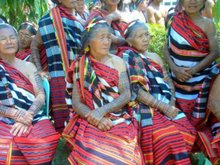
I realized during my stay here in Manila, and even when I was studying in Baguio City that people have so many misconceptions about indigenous peoples in the Cordilleras, collectively called Igorots. I also realized that the farther one goes, the more numerous and unsettling the misconceptions are as I experienced firsthand when I went to some parts of Mindanao. This is partly due to the textbooks used in schools, which obviously were not updated; also due to hearsay, and generalizations.
When the Missions group had a meeting one time to plan their exposure trip to Bontoc this semester break, one of them said to me that he wanted to go to the areas where the indigenous peoples in my hometown are so he could observe the culture. I was speechless for a moment, and then I told him that the people there are the indigenous people themselves, including myself. He was thinking of tribes that were up, up in the mountains and are very far away from so-called civilization, which is so much untrue for indigenous peoples nowadays.
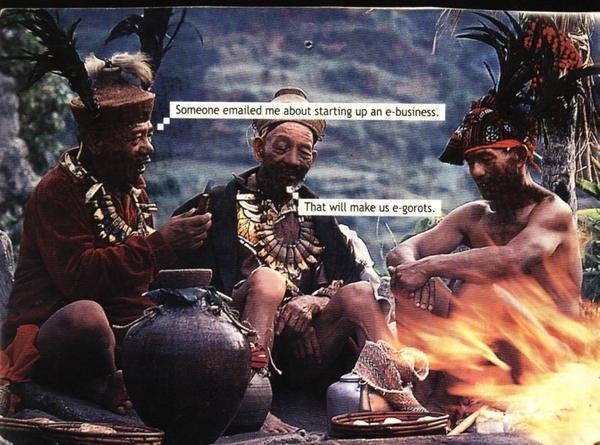
In fact, that is the reason why I am focusing on the Bontoc Igorots, of which I am a part of, as a topic for my manual because there are a lot of complex issues involved. We are no longer dealing with indigenous peoples who are segregated from society, but are now immersed in and influenced by other cultures due to accessibility, intermarriage, migration, immigration, education, media, religion, and a whole lot of factors. With regards to media, I was even surprised to discover that there is a lot of information about Bontoc in the internet.
Cultural change is so rapid that there is now a great generation gap between the older generations from that of the succeeding generations. And the question is no longer about one’s identity as a Bontoc Igorot, but how to maintain a certain sense of identity in the midst of all these factors. I think that we can no longer expect to have a Bontoc Igorot identity or world view that has been left untouched or unchanged by the factors mentioned above. There would still be an identity, but one that has emerged from the influence and changes rendered by the factors.
I believe identity is important because it provides a person a sense of belongingness and community. One of the customs of the Bontoc people is that when a mother gives birth to her child, the father buries the placenta of the child under their house. I asked my grandmother why they had to do that and she said it is to give the child roots; that wherever s/he goes, s/he always comes back home to where a part of her/him is buried. That is such a great assurance for a person’s self-worth, that there is a place where s/he can always come back to no matter where life leads her/him.
But how does one balance respect for one’s own culture while integrating other cultures? This is of course a universal dilemma for all peoples. The media has opened a lot of options for us that it is difficult and at times, impossible to hold on to one’s identity as a part of a group, or a nation for that matter, unless extra measures are implemented. The world has indeed become what Marshall McLuhan termed ‘a global village’.
This is where education comes in, because it is a powerful tool to affirming the importance of holding on to one’s roots and one’s sense of identity, and at the same time, being open to other influences. It can serve as a guide for students to appreciate their own culture and in turn, appreciate other cultures as well.
Sunday, April 15, 2007


Friday, April 13, 2007
Timicheg
This is a very interesting story of an Ifontok man named Timicheg, who died in Ghent, Belgium (circa 1913), and who will have (or maybe he already has) a street named after him: http://opinion.inquirer.net/inquireropinion/columns/view_article.php?article_id=28507.
(Kudos to http://www.igorotblogger.blogspot.com/)
(Kudos to http://www.igorotblogger.blogspot.com/)
Monday, March 19, 2007
A Sociolinguistic Observation
(This is a paper I wrote for my Sociolinguistics class.)
I am going to write about a multilingual situation that I observed in my younger cousins, when I went home summer of last year. It pertains to the addition of a language in their repertoire of languages due to media. This is also relevant to language shift as the language that is becoming popular to them may be the language that their generation might prefer to shift to if the time should come.
Our closest neighbor is my mother’s youngest brother. His two daughters, aged 3 and 6, were playing with another cousin, aged 7, in their front yard, which was located near our backdoor. I was in our house doing some household chores. They were playing bahay-bahayan, pretending that they were cooking something in their cooking set toys. Since they were not that far from where I was, their voices were quite audible.
When I listened in on their conversation, I was surprised to hear them speaking in Filipino or Tagalog for that matter. Only in instances where they find it hard to express themselves do they switch to the vernacular. Then one of my uncle’s sons, aged 5, wanted to join them and started saying, “Sali ak! Sali ak!” Now, sali is Tagalog for ‘join’ and ak is the vernacular for ‘I’. He was mixing the two languages using the grammar of the vernacular and the lexicon of both the vernacular and Tagalog. I corrected him and told him not to use sali, but to say mitapi, which is our vernacular for ‘join’. He did not listen to me but just kept on saying, “Sali ak! Sali ak!”
Tagalog had never been a popular language in our community before. For my generation, we learned it in school, starting in Grade 1, but most of us had little or no chance of using it during our younger years. Most of us would only start to speak Tagalog when we go to cities for schooling or find employment there. In my case, I practiced speaking Tagalog when I transferred to Baguio city in second year high school, but it was minimal. Most of the practice I had in high school was speaking the trade language of Ilocano since I was in a school whose students come from the Cordilleras, and Ilocano is the trade language in the Cordillera. Much of the practice I had in speaking Tagalog was in college because I was in a school whose students were much more diverse.
For my parent’s and grandparent’s generation, however, Tagalog was sparely used. In diglossia terms, theirs would strictly be English for H and the vernacular for L. My parent’s generation is much better in speaking the said language, since they also learned it in school, but my grandparent’s generation would have no comprehension of it. In short, it would be very much surprising to hear children in my day or in their day using Tagalog as the playtime language. It was a far cry from the situation, which I observed from my younger cousins.
What led to this great change? What prompted Tagalog to rise out of nowhere and become popular enough for children to use it in their playtime? One of the huge and probably the most pervasive factor is cable television, which came to Bontoc in 1997. Along with it came the local programs, of which Tagalog was the language commonly used. My younger cousins’ generation had been far more exposed to television than I did when I was their age. In addition, Tagalog telenovelas or prime time soap operas shown everyday not only hooked adults and surprisingly grandparents, some of whom rely on translation from the younger generation to grasp the story, but children as well. It is no longer unusual to hear children singing the Tagalog theme song of a popular telenovela or soap opera nowadays. Situations and events wherein a child can imagine himself or herself to be in now included speaking Tagalog, as in the case of my younger cousins.
However, there are other factors as well. Some of them would be more accessible roads, which attract more tourists and allow businesses and trade to thrive; migration especially for students who come to Bontoc for their schooling; and intermarriage.
Although it is inevitable that Bontoc children will learn Tagalog in school and that they may eventually learn to speak it, the influence of media has elevated its status to become a language that children speak even before they learn it in school. This is a different mechanism from the way the generations before them learned it. It is no longer a language that is imposed upon a community because of a language policy, but it now becomes a language that a younger generation chooses to speak in. Because of this, it will certainly have a more invasive effect on the vernacular, especially on the vocabulary of the incoming generation.
How it will lead from here, whether this phenomenon may mean just another addition of a language in a multilingual community or whether the media may have that much influence in directing a language shift, is still speculation. Only the future knows how this phenomenon will develop in the Bontoc community.
I am going to write about a multilingual situation that I observed in my younger cousins, when I went home summer of last year. It pertains to the addition of a language in their repertoire of languages due to media. This is also relevant to language shift as the language that is becoming popular to them may be the language that their generation might prefer to shift to if the time should come.
Our closest neighbor is my mother’s youngest brother. His two daughters, aged 3 and 6, were playing with another cousin, aged 7, in their front yard, which was located near our backdoor. I was in our house doing some household chores. They were playing bahay-bahayan, pretending that they were cooking something in their cooking set toys. Since they were not that far from where I was, their voices were quite audible.
When I listened in on their conversation, I was surprised to hear them speaking in Filipino or Tagalog for that matter. Only in instances where they find it hard to express themselves do they switch to the vernacular. Then one of my uncle’s sons, aged 5, wanted to join them and started saying, “Sali ak! Sali ak!” Now, sali is Tagalog for ‘join’ and ak is the vernacular for ‘I’. He was mixing the two languages using the grammar of the vernacular and the lexicon of both the vernacular and Tagalog. I corrected him and told him not to use sali, but to say mitapi, which is our vernacular for ‘join’. He did not listen to me but just kept on saying, “Sali ak! Sali ak!”
Tagalog had never been a popular language in our community before. For my generation, we learned it in school, starting in Grade 1, but most of us had little or no chance of using it during our younger years. Most of us would only start to speak Tagalog when we go to cities for schooling or find employment there. In my case, I practiced speaking Tagalog when I transferred to Baguio city in second year high school, but it was minimal. Most of the practice I had in high school was speaking the trade language of Ilocano since I was in a school whose students come from the Cordilleras, and Ilocano is the trade language in the Cordillera. Much of the practice I had in speaking Tagalog was in college because I was in a school whose students were much more diverse.
For my parent’s and grandparent’s generation, however, Tagalog was sparely used. In diglossia terms, theirs would strictly be English for H and the vernacular for L. My parent’s generation is much better in speaking the said language, since they also learned it in school, but my grandparent’s generation would have no comprehension of it. In short, it would be very much surprising to hear children in my day or in their day using Tagalog as the playtime language. It was a far cry from the situation, which I observed from my younger cousins.
What led to this great change? What prompted Tagalog to rise out of nowhere and become popular enough for children to use it in their playtime? One of the huge and probably the most pervasive factor is cable television, which came to Bontoc in 1997. Along with it came the local programs, of which Tagalog was the language commonly used. My younger cousins’ generation had been far more exposed to television than I did when I was their age. In addition, Tagalog telenovelas or prime time soap operas shown everyday not only hooked adults and surprisingly grandparents, some of whom rely on translation from the younger generation to grasp the story, but children as well. It is no longer unusual to hear children singing the Tagalog theme song of a popular telenovela or soap opera nowadays. Situations and events wherein a child can imagine himself or herself to be in now included speaking Tagalog, as in the case of my younger cousins.
However, there are other factors as well. Some of them would be more accessible roads, which attract more tourists and allow businesses and trade to thrive; migration especially for students who come to Bontoc for their schooling; and intermarriage.
Although it is inevitable that Bontoc children will learn Tagalog in school and that they may eventually learn to speak it, the influence of media has elevated its status to become a language that children speak even before they learn it in school. This is a different mechanism from the way the generations before them learned it. It is no longer a language that is imposed upon a community because of a language policy, but it now becomes a language that a younger generation chooses to speak in. Because of this, it will certainly have a more invasive effect on the vernacular, especially on the vocabulary of the incoming generation.
How it will lead from here, whether this phenomenon may mean just another addition of a language in a multilingual community or whether the media may have that much influence in directing a language shift, is still speculation. Only the future knows how this phenomenon will develop in the Bontoc community.
Subscribe to:
Posts (Atom)